Bridges of Budapest
Bridges of Budapest to Visit
Budapest is home to 13 bridges that are open to local traffic, plus 2 railway bridges that are exclusively for trains. Each bridge has its own character, offering stunning views of the city’s skyline. Starting from the north and moving southward, here is a list of the bridges you can find in Budapest:
Most famous bridges of Budapest to visit
 Megyeri Bridge / (Megyeri híd)
 Name in English and Hungarian: Megyeri Bridge / (Megyeri híd)
Built in: 2008
Rebuilt in: Has never been rebuilt
Pest district: The bridge connects to District IV (Újpest) on the Pest side
Buda District: On the Buda side, the bridge connects to District III (Óbuda-Békásmegyer)
Frequent public transport line (pest side): Currently, there isn't a specific public transport line that crosses the Megyeri Bridge itself, as it mainly serves vehicular traffic. However, nearby bus lines connect the general area on the Pest side.
Frequent public transport line (Buda side): Currently, there isn't a specific public transport line that crosses the Megyeri Bridge itself, as it mainly serves vehicular traffic. However, nearby bus lines connect the general area on the Pest side. Similarly, the bridge itself does not have dedicated public transit, though buses serve nearby areas in District III on the Buda side.
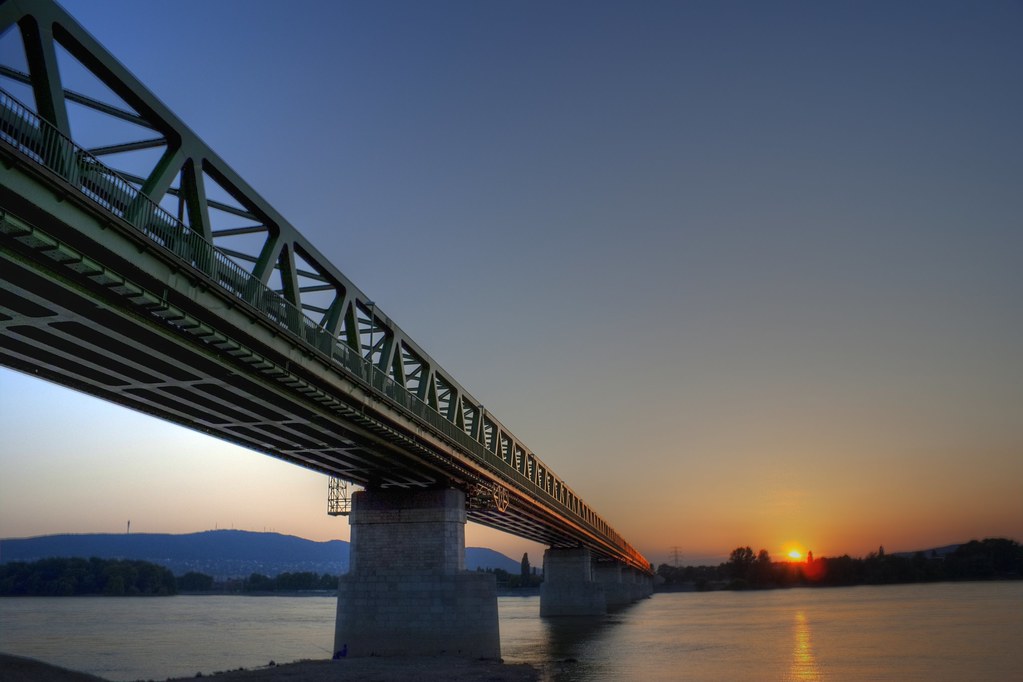 Újpest Rail Bridge/(Újpesti vasúti híd)
Name in English and Hungarian: Újpest Rail Bridge/(Újpesti vasúti híd)
Built in: Originally constructed in 1896.
Rebuilt in: The bridge was rebuilt in 1945 after being destroyed during World War II and has undergone several renovations since then.
Pest district:The bridge connects to District IV (Újpest) on the Pest side.
Buda District: On the Buda side, it connects to District III (Óbuda-Békásmegyer).
Frequent public transport line (pest side): The Újpest Rail Bridge primarily supports rail traffic. However, nearby bus and tram lines, including tram line 12 and 14in District IV, provide access to the area.
Frequent public transport line (Buda side): Public transport near the Buda end includes bus lines that connect District III to other parts of the city, though no public transit line directly crosses the rail bridge itself.
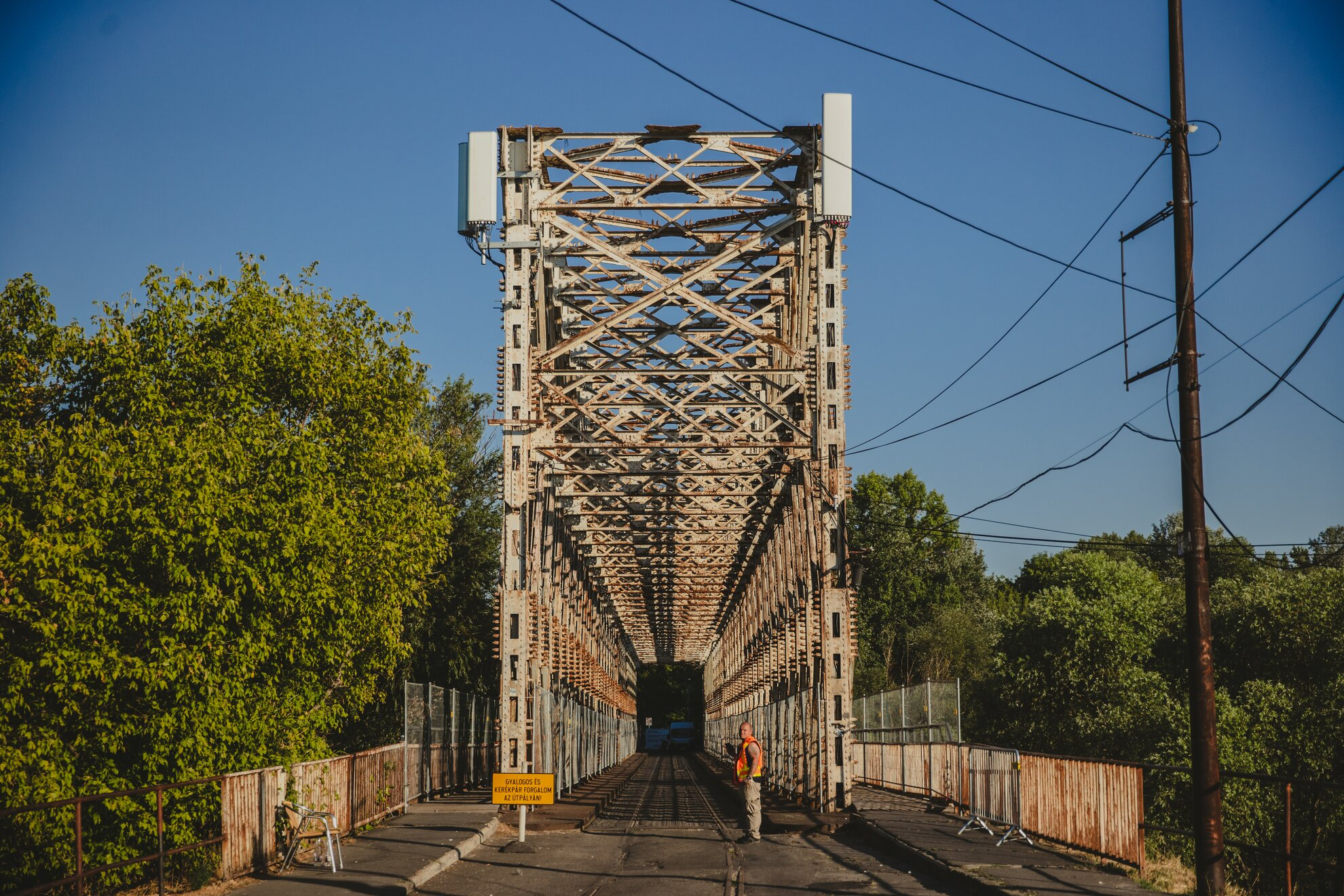 K Bridge/(K híd)
Name in English and Hungarian: K Bridge/(K híd)
Built in: The original structure was built in 1955
Rebuilt in: The bridge has undergone various maintenance and minor reconstructions, but there hasn’t been a complete rebuild.
Pest district: The bridge connects to District XIII (Angyalföld) on the Pest side.
Buda District: On the Buda side, it connects to District III (Óbuda-Békásmegyer).
Frequent public transport line (pest side): While K Bridge itself does not have public transport lines directly on it, nearby bus line 115 and other transit options serve District XIII
Frequent public transport line (Buda side): There’s no direct public transport line on the bridge itself, but bus lines 34 and 106 serve the nearby areas of District III on the Buda side.
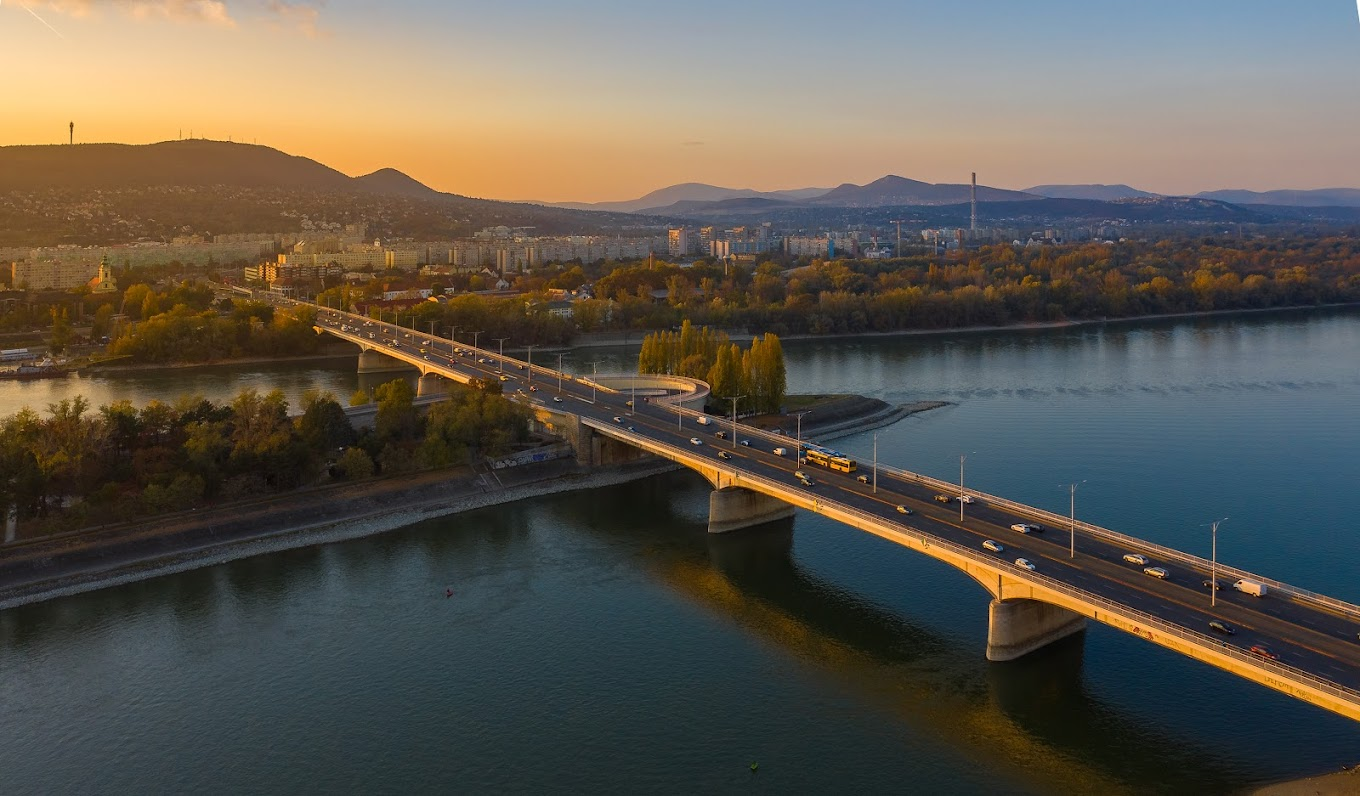 Árpád Bridge (Árpád híd)
Name in English and Hungarian: Árpád Bridge (Árpád híd)
Built in: 1950 (initial construction was completed)
Rebuilt in: Árpád Bridge was significantly renovated and widened between 1980 and 1984 to accommodate increasing traffic.
Pest district: The bridge connects to District XIII (Angyalföld) on the Pest side.
Buda District: On the Buda side, it connects to District III (Óbuda-Békásmegyer)
Frequent public transport line (pest side): Tram line 1 runs along Árpád Bridge and has stops on the Pest side in District XIII.
Frequent public transport line (Buda side): Tram line 1 also continues on the Buda side in District III, making Árpád Bridge an essential part of this tram route.
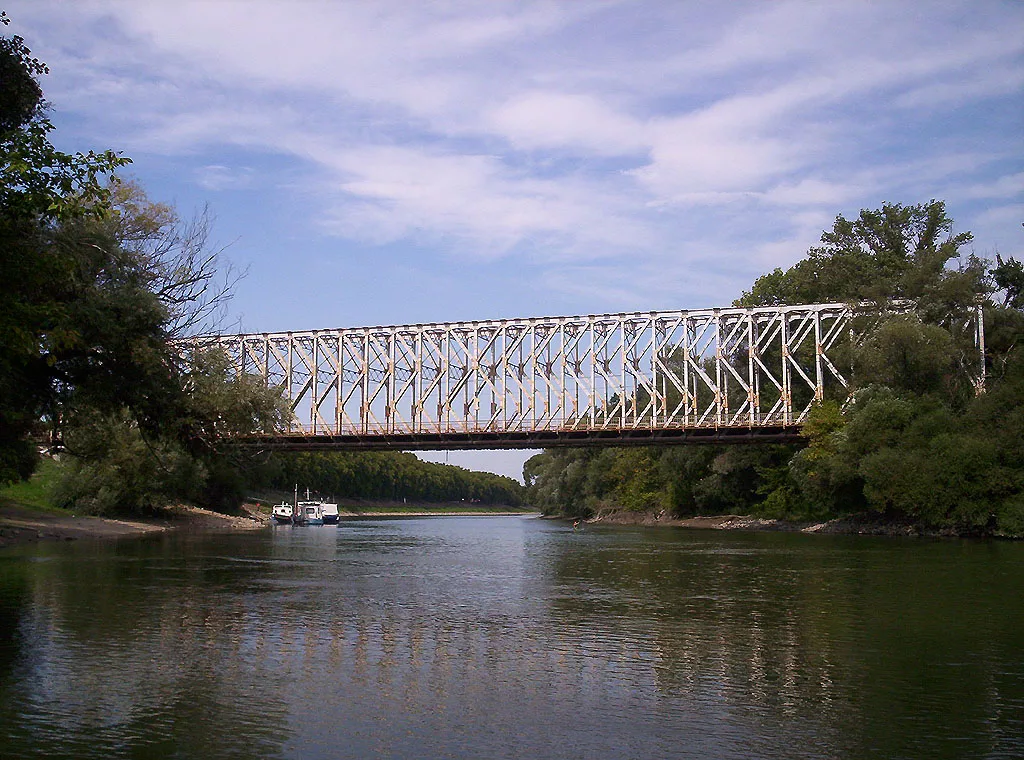 Shipyard Bridge (Hajógyári híd)
Name in English and Hungarian: Shipyard Bridge (Hajógyári híd)
Built in: Originally constructed as a temporary bridge in 1955.
Rebuilt in: The bridge has not had a complete rebuild but has undergone maintenance and renovations over the years.
Pest district: The bridge connects to District XIII (Angyalföld) on the Pest side.
Buda District: On the Buda side, it connects to District III (Óbuda-Békásmegyer).
Frequent public transport line (pest side): There is no direct public transport line across Shipyard Bridge itself, as it mainly serves local traffic and industrial needs. However, nearby public transport options serve the Angyalföld area.
Frequent public transport line (Buda side): Similar to the Pest side, no direct public transport lines cross Shipyard Bridge, though District III has accessible bus lines nearby.
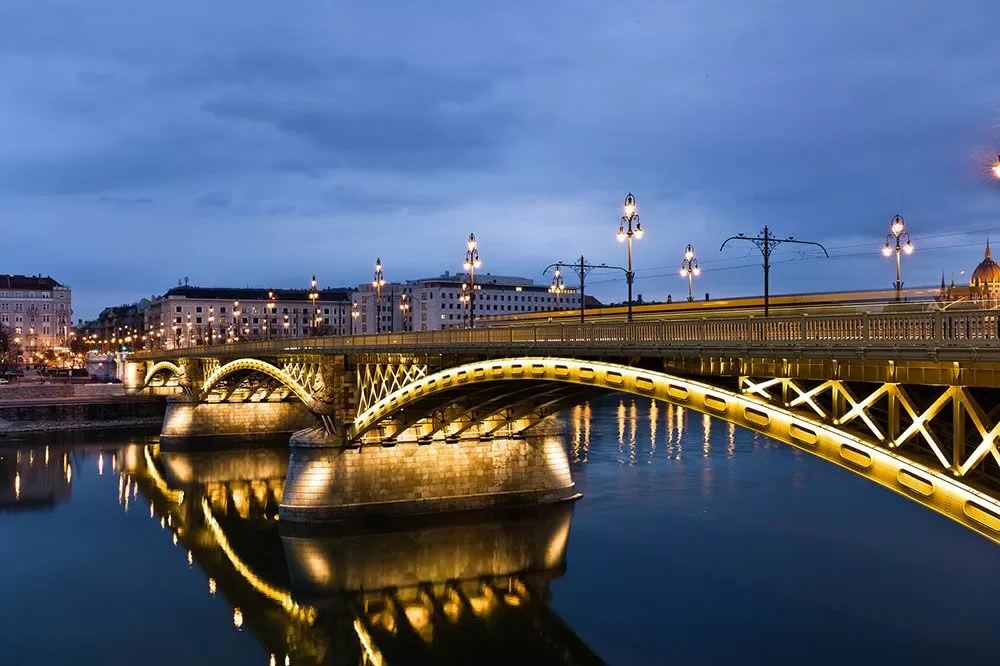 Margaret Bridge (Margit híd)
 Name in English and Hungarian: Margaret Bridge (Margit híd)
Built in: 1876
Rebuilt in: The bridge was partially destroyed in 1944 during World War II and was subsequently rebuilt in 1948. It underwent a comprehensive renovation between 2009 and 2011 to restore and strengthen the structure
Pest district: The bridge connects to District XIII (Újlipótváros) on the Pest side.
Buda District: On the Buda side, it connects to District II (Rózsadomb)
Frequent public transport line (pest side): Tram lines 4 and 6 run along Margaret Bridge, with stops on the Pest side.
Frequent public transport line (Buda side): Tram lines 4 and 6 also serve the Buda side, with stops right on the bridge itself.
 Széchenyi Chain Bridge (Széchenyi Lánchíd)
Name in English and Hungarian: Széchenyi Chain Bridge (Széchenyi Lánchíd)
Built in: 1849
Rebuilt in: The bridge underwent major renovations after being damaged during World War II, with significant restoration completed in 1949 and further works in the 1990s.
Pest district: The bridge connects to District V (Belváros-Lipótváros) on the Pest side.
Buda District: On the Buda side, it connects to District I (Castle District).
Frequent public transport line (pest side): Bus 16, 105 (when operational, as currently the bridge undergoes restoration)
Frequent public transport line (Buda side): Bus 16, 105
 Elisabeth Bridge (Erzsébet híd)
Name in English and Hungarian: Elisabeth Bridge (Erzsébet híd)
Built in: 1903
Rebuilt in: 1964 (the original was destroyed in WWII)
Pest district: District V (Belváros-Lipótváros)
Buda District: District I (Várkerület)
Frequent public transport line (pest side): Bus 7, 8E, 108E
Frequent public transport line (Buda side): Bus 7, 8E, 108E
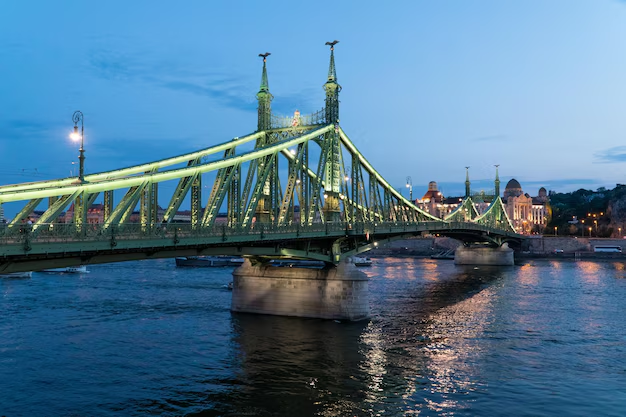 Liberty Bridge (Szabadság híd)
Name in English and Hungarian: Liberty Bridge (Szabadság híd)
Built in: 1896 (celebrating Hungary’s Millennium)
Rebuilt in: 1946 (after WWII destruction)
Pest district: District IX (Ferencváros)
Buda District: District XI (Újbuda)
Frequent public transport line (pest side): Tram 47, 49
Frequent public transport line (Buda side): Tram 47, 49
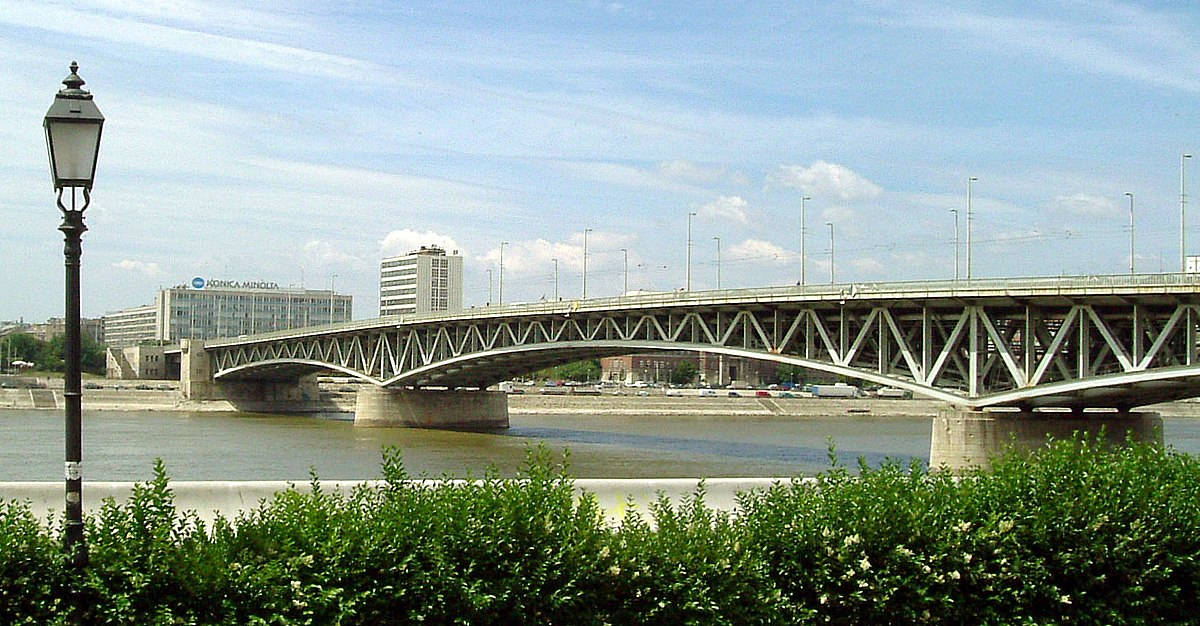 Petőfi Bridge (Petőfi híd)
 Name in English and Hungarian: Petőfi Bridge (Petőfi híd)
Built in: 1937
Rebuilt in: 1952 (after WWII destruction)
Pest district: District IX (Ferencváros)
Buda District: District XI (Újbuda)
Frequent public transport line (pest side): Tram 4, 6
Frequent public transport line (Buda side): Tram 4, 6
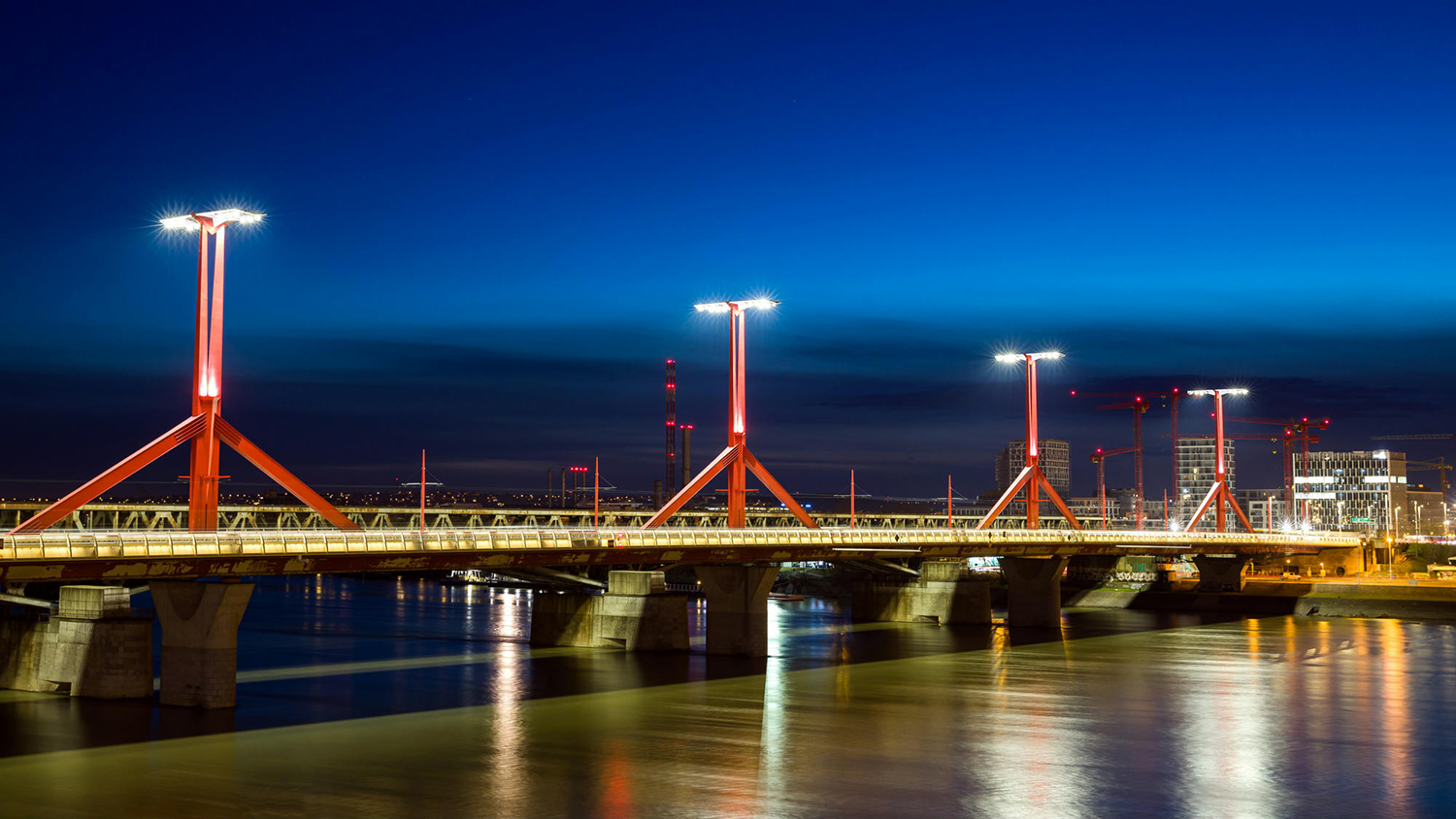 Rákóczi Bridge (Rákóczi híd)
Name in English and Hungarian: Rákóczi Bridge (Rákóczi híd)
Built in: 1995 (initially known as Lágymányosi Bridge)
Rebuilt in:No major reconstructions; only updates and enhancements since opening
Pest district: District IX (Ferencváros)
Buda District: District XI (Újbuda)
Frequent public transport line (pest side): Tram 1
Frequent public transport line (Buda side): Tram 1
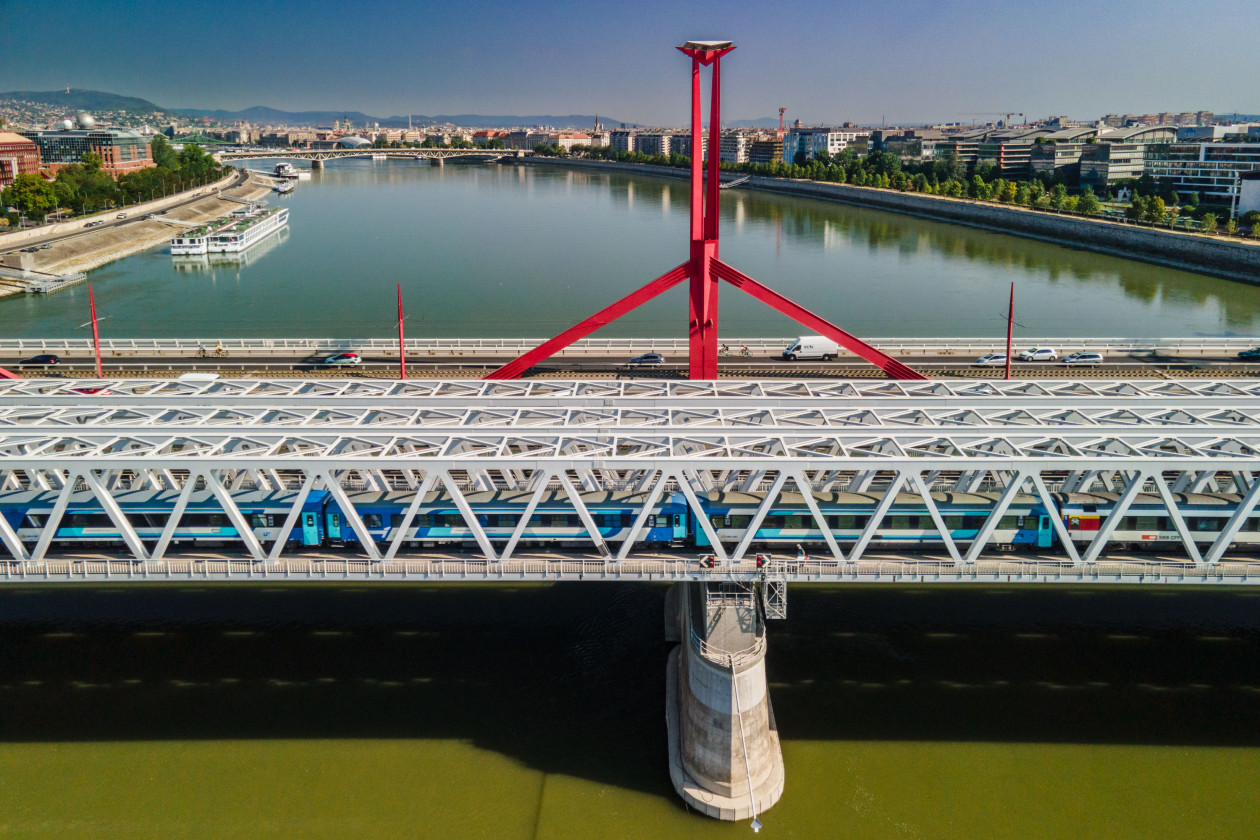 Connective Railway Bridge (Összekötő vasúti híd)
Name in English and Hungarian: Connective Railway Bridge (Összekötő vasúti híd)
Built in: 1877
Rebuilt in: 1953 (following WWII damage)
Pest district: District IX (Ferencváros)
Buda District: District XI (Újbuda)
Frequent public transport line (pest side): Primarily a railway bridge, so no regular public tram or bus services on its ends
Frequent public transport line (Buda side): Primarily a railway bridge, so no regular public tram or bus services on its ends
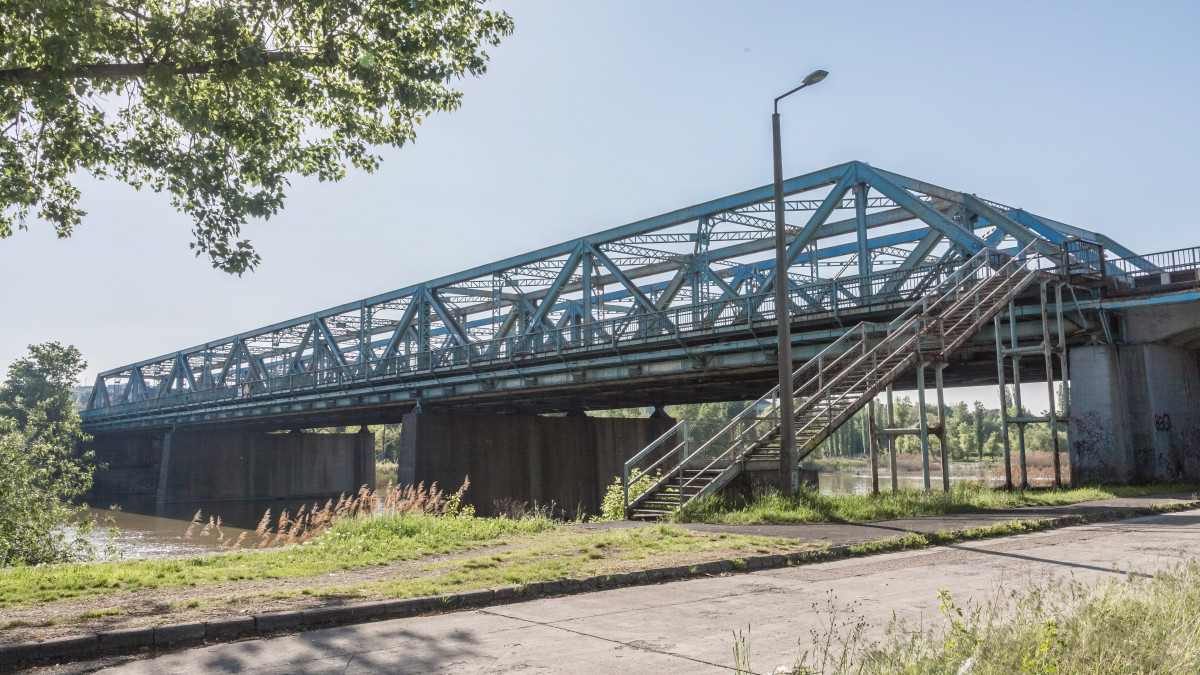 Gubacsi Bridge (Gubacsi híd)
Name in English and Hungarian: Gubacsi Bridge (Gubacsi híd)
Built in: 1924
Rebuilt in: No major reconstructions, but regular maintenance and upgrades have been performed
Pest district: District XX (Pesterzsébet)
Buda District: District XXI (Csepel)
Frequent public transport line (pest side): No frequent public transport (mainly serves local traffic)
Frequent public transport line (Buda side): No frequent public transport (primarily a local road connection)
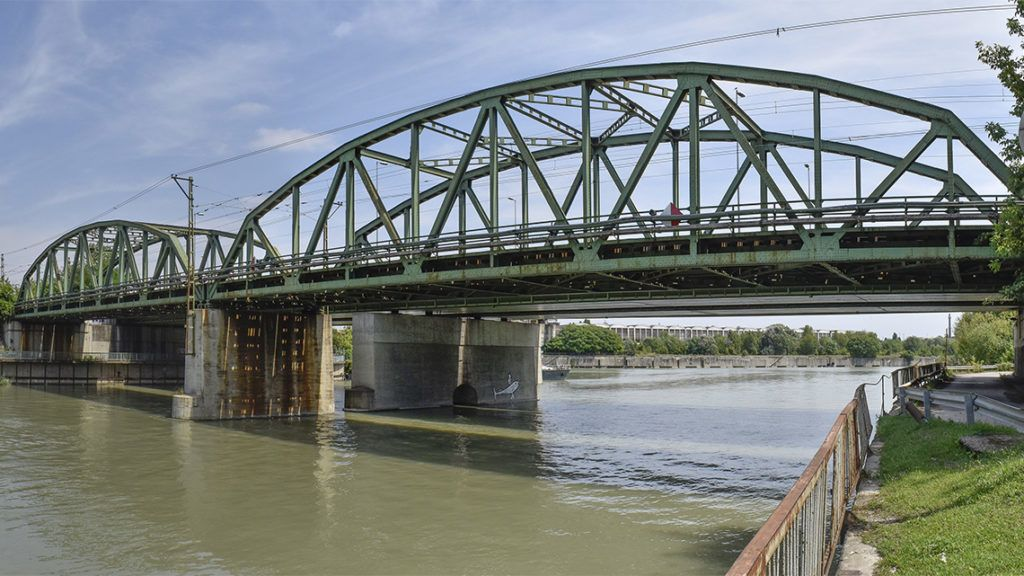 Kvassay Bridge (Kvassay híd)
Name in English and Hungarian: Kvassay Bridge (Kvassay híd)
Built in: 1927
Rebuilt in: 1957 (following WWII damage)
Pest district: District IX (Ferencváros)
Buda District: District XXI (Csepel)
Frequent public transport line (pest side): No frequent public transport (mainly serves local and industrial traffic)
Frequent public transport line (Buda side): No frequent public transport (primarily a road bridge)
 Map of Bridges
Árpád Bridge (Árpád híd)
From District XIII to District III, the Árpád Bridge connects the northern regions of Pest and Buda across the center of Budapest. It is one of the city's longest bridges, with a length of 928 meters and a width of 35 meters, having been constructed in 1950. The sleek, uncomplicated design of this multi-lane bridge prioritizes supporting both public transportation and heavy traffic. It was first envisioned during World War II, but building was postponed until the post-war period. It is a practical yet picturesque bridge that is frequently utilized by both commuters and visitors due to its proximity to Margaret Island and the well-known Római beach region.
Margaret Bridge (Margit híd)
One of the most recognizable and strategically situated bridges in Budapest is Margaret Bridge, which spans Margaret Island and connects District XIII on the Pest side with District II on the Buda side. It is 637 meters long and 25 meters broad, with a characteristic bend at the middle that leads to Margaret Island. It was constructed in 1876. This bridge, which was created by French engineer Ernest Goüin, has a Parisian flavor to it because of its exquisite, ornamental design, cast-iron railings, and statues. Rebuilt in 1948 after being destroyed during World War II, it is today renowned for its beauty and close proximity to Margaret Island, a well-liked park with leisure activities and picturesque views.
Széchenyi Chain Bridge (Széchenyi Lánchíd)
One of Budapest's most well-known sights is the Széchenyi Chain Bridge, which was constructed in 1849 and connects District I in Buda with District V in Pest. It was the first permanent bridge across the Danube in Budapest, designed by British engineer William Tierney Clark and overseen by Adam Clark. It represented the advancement and unification of Hungary. With neoclassical stone arches and recognizable lion statues protecting each end, the structure is 375 meters long and 14.8 meters broad. Despite being damaged during World War II, it was reconstructed in 1949 and is now a well-liked tourist destination close to the bustling Pest promenade and the old Buda Castle.
Elisabeth Bridge (Erzsébet híd)
The 378-meter-long Elisabeth Bridge, which was constructed in 1903 and reconstructed in 1964, spans the Danube and links District V in Pest with District I in Buda. This bridge, which bears the name of Austria-Hungary's Empress Elisabeth (Sissi), had a majestic suspension design at first. It was reconstructed in a contemporary, minimalistic form to handle high traffic after being destroyed during World War II. The bridge is an important crossing for both residents and visitors because it offers direct access to Gellért Hill on the Buda side and the bustling city center on the Pest side.
Petőfi Bridge (Petőfi híd)
District IX on the Pest side and District XI on the Buda side are connected by the Petőfi Bridge, which was finished in 1937 and renovated in 1952. This 514-meter-long, 25.6-meter-wide bridge bears the name of poet Sándor Petőfi. It connects important roads on both banks of the Danube and is mostly used for city traffic. Its design is simple and effective. It is a key thoroughfare for Budapest's busy traffic system and located near the Great Market Hall.
Rákóczi Bridge (Rákóczi híd)
One of the city's most recent bridges, the Rákóczi Bridge in southern Budapest, opened its doors in 1995. It is 494 meters long and features a contemporary design that can handle tram and heavy car traffic. It connects the districts of Ferencváros and Újbuda and is named for the Rákóczi family, who played a significant role in Hungarian history. It is a significant transportation route that is close to cultural icons like the National Theatre and Müpa. Its modern, practical design contrasts with Budapest's ancient surroundings.
Liberty Bridge (Szabadság híd)
District IX in Pest and District XI in Buda are connected by the Liberty Bridge, which was built in 1896 for Hungary's Millennium celebrations. The bridge, which is 20 meters wide and 333 meters long, has beautiful Art Nouveau motifs, including statues of Turul birds on top of each pylon. It was created by János Feketeházy and features an unmistakable green ironwork pattern. It was restored in 1946 after being damaged during World War II. It provides tourists with picturesque vistas and an understanding of Budapest's past and is situated close to the Great Market Hall in Pest and Gellért Hill in Buda.
Other Bridges of Budapest
Shipyard Bridge (Hajógyári híd)
The Shipyard Bridge, also called Óbudai híd, is situated in the northern part of Budapest and serves mainly as a bridge that connects industrial zones and avoids the main thoroughfares of the city. This bridge, which is roughly 370 meters long and was constructed in the 1950s, is more practical than beautiful. The shipyard that used to operate nearby needed industrial transportation, therefore it was built. Since the bridge is only used for practical purposes, it lacks any noteworthy architectural ornamentation.
Megyeri Bridge (Megyeri híd)
Budapest's northernmost bridge spans the Danube at a narrowing point and links the districts of Újpest in Pest with Békásmegyer in Buda. With a length of 1,862 meters and a width of 35 meters, it is one of the city's most contemporary bridges and was opened in 2008. The sleek, modern design of this cable-stayed bridge, which was created by Hungarian architects Géza Pál and Miklós Berki, features tall pylons that give it a remarkable profile that can be seen from a distance. The bridge was constructed as a crucial northern connection in Budapest's ring road system and to relieve traffic congestion. The peaceful island of Népsziget is a well-liked destination for residents, and the bridge itself provides stunning views of the surrounding greenery.
Újpest Rail Bridge (Újpesti vasúti híd)
Connecting the northern regions of Buda and Pest, the Újpest Rail Bridge is mostly utilized for train traffic and is located directly south of the Megyeri Bridge. It was a vital component of Budapest's rail system when it was first constructed in 1896, enabling trade and transportation across the Danube. The bridge was reconstructed in 1955 to resume its use as a rail corridor after sustaining significant damage during World War II. The bridge is 674 meters long and has a small enough width to accommodate two train tracks. Its practical aim is reflected in its industrial and utilitarian design. The bridge's proximity to the ancient Roman remains at Aquincum lends the area a historical dimension.
K Bridge (K híd)
The K Bridge, also known as the "Királyhágó Bridge," connects the smaller neighborhoods of the Buda side with District III (Óbuda) in the northern part of Budapest. This rather thin bridge, which is less than 100 meters long, connects to facilities such as the North Buda Power Plant and mostly serves industrial traffic.
But in summer, tourists enter the Sziget Festival via this bridge, which infuses this formerly industrial neighbourhood with lively vitality.
The K Bridge, which was constructed in the 1950s, has a simple, functional architectural style that prioritized functionality over aesthetic appeal. It is a lesser-known but useful piece of infrastructure in Budapest's network because of its peaceful setting, which provides a view of the surrounding residential districts and industrial areas.
Connective Railway Bridge (Összekötő vasúti híd)
A crucial connection for Budapest's rail traffic, the Connective Railway Bridge spans the Danube between District IX and District XI and was finished in 1877. With its practical, industrial design, it serves both freight and passenger trains and is approximately 477 meters in length. It was restored after WWII damage in 1953. It serves as a vital link between Budapest's train system and the Danube, and it is situated close to the cultural landmarks of Ferencváros and the Ráckeve HÉV railway.
Gubacsi Bridge (Gubacsi híd)
Constructed in 1924, the Gubacsi Bridge links District XXI (Csepel Island) in the southern portion of Budapest with District XX on the Pest side. It is primarily a road bridge that is only 103 meters long and has a practical design that is suited to local traffic. It is in a more tranquil location, doesn't see a lot of traffic, but gives access to the industrial districts of Csepel Island. It is a local connection rather than a popular tourist destination, and it is near natural areas along the Danube.
Kvassay Bridge (Kvassay híd)
Built in 1927 and reconstructed in 1957, the Kvassay Bridge links District XXI (Csepel Island) in southern Budapest with District IX in Pest. The bridge's simple, long-lasting design makes it indispensable for industrial traffic. It is 350 meters long and links industrial facilities in Csepel with neighborhoods close to the Freeport of Budapest.